
We all have them. These invisible, automatic ways our minds protect us from pain, overwhelm, or truths we're not ready to face. They're called psychological defenses, and honestly? They're pretty brilliant, until they're not.
"Defenses are the creative solutions of childhood which become the neurotic limitations of adulthood." — Nancy McWilliams
Think of defenses like emotional bodyguards. They show up when we're young to help us survive difficult situations, relationships, or feelings that feel too big to handle. But sometimes these bodyguards stick around way past their expiration date, blocking us from intimacy, growth, or even basic self-awareness.
Let me walk you through some of the most common defenses I see in my Oakland therapy practice.
What Are Psychological Defenses, Really?
Defenses are unconscious mental strategies we use to avoid or minimize psychological pain. They're not character flaws or signs of weakness. Defenses adaptive mechanisms that helped you survive. The problem is, what helped you survive at 7 might be sabotaging your relationships at 37.
"Our defenses are relational achievements, not individual pathologies." — Stephen Mitchell
"The goal is not to eliminate defenses but to increase their flexibility." — Jonathan Shedler
Defenses aren't all bad. Sometimes we need them. But when they're running the show unconsciously, they can keep us stuck, disconnected, or repeating the same painful patterns over and over.
The Defense Squad: Meet Your Inner Protectors
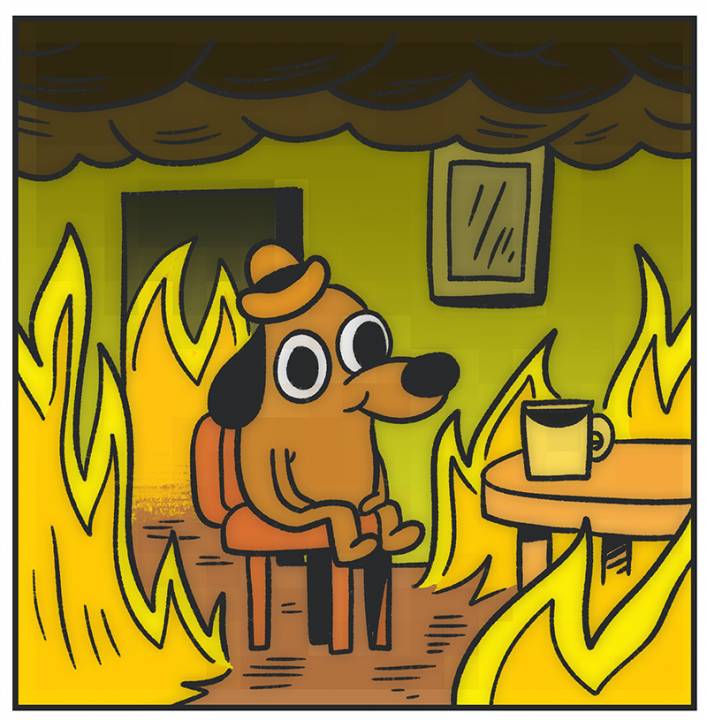
Denial: The “Everything Is Fine" Defense
This is the classic head-in-the-sand approach. Your partner is clearly pulling away, but you insist everything's great. Your drinking is affecting your work, but it's "not that bad." Your anxiety is through the roof, but you're "handling it fine."
Client example: Kasia kept telling me their relationship was "perfect" even as they described feeling lonely, unheard, and like they were walking on eggshells. It took months before they could acknowledge that maybe, just maybe, things weren't actually fine.
"What we do not wish to see, we do not see." — Anna Freud
Projection: The “It's Not Me, It's You" Defense

Ever notice how the thing that annoys you most about someone else is often something you can't stand about yourself? That's projection. We unconsciously take our own unacceptable feelings and see them in other people instead.
Client example: Marcus constantly complained that his coworkers were "selfish and competitive," while being completely blind to his own cutthroat behavior in meetings.
"We see in others what we cannot bear to see in ourselves." — Carl Jung
Splitting: The “All Good or All Bad" Defense

This is black-and-white thinking on steroids. People are either perfect or terrible, situations are either amazing or catastrophic. There's no middle ground, no nuance, no room for the messy complexity that makes us human.
Client example: Sage would idealize new friends, putting them on pedestals, then feel devastated and betrayed when they inevitably showed normal human flaws.
"Unable to tolerate ambiguity, the mind creates false certainties." — Otto Kernberg
Intellectualization: The “Let Me Think My Way Out of Feelings" Defense
Some of us are so uncomfortable with emotions that we turn everything into an intellectual exercise. We analyze, theorize, and philosophize our way around actually feeling anything.
Client example: Micah could give me a brilliant dissertation on his childhood trauma and its psychological impacts, but he couldn't tell me how he felt about it. "Angry" was a concept; anger was nowhere to be found in his body.
“[The intellectualizer] lives in his head to avoid living in his body." — Wilhelm Reich
Moral Masochism: The “I Deserve to Suffer" Defense
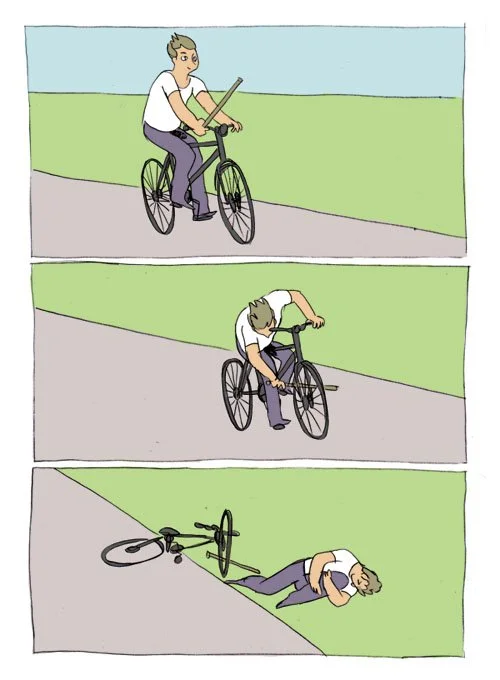
Some of us invite suffering, failure, or punishment, not from conscious desire for pain, but because success or happiness feels morally wrong or psychologically dangerous. Maybe we learned that those who suffer receive love and attention. This pattern often serves hidden functions: managing deep guilt through self-punishment, maintaining unconscious loyalty to suffering caregivers, or preserving familiar (if painful) emotional states.
Client example: Sarah, a talented lawyer, consistently took on impossible caseloads, worked for firms known for their toxic culture, and sabotaged her own success. This pattern stemmed from growing up with a depressed mother who believed that "good people sacrifice for others" and that "success corrupts people."
"Some patients seem to be in love with their symptoms." — Nancy McWilliams
Reaction Formation: The “I'll Show You the Opposite" Defense
This is when we express the exact opposite of what we're actually feeling. The person who's overly sweet might be hiding rage. The one who's aggressively independent might be desperately lonely.
Client example: Maria presented as this super-positive, grateful person who "never got upset about anything." Underneath were years of unexpressed anger and resentment she was terrified to acknowledge.
Displacement: The “Wrong Target" Defense

When we can't express feelings toward the person who actually triggered them (because it's too scary or risky), we take it out on someone safer. Road rage after a fight with your boss. Snapping at your partner after a difficult day with your mother.
"We are always defending against something with someone." — Donna Orange
Repression: The “What Painful Memory?" Defense
This is the mind's delete button. Traumatic or overwhelming experiences get pushed so far down that we genuinely can't remember them. It's not the same as consciously choosing not to think about something. Repression happens completely outside our awareness.
Client example: Alex had no memory of the two years after their parents' messy divorce, despite their siblings having vivid recollections of that chaotic time. Their mind had essentially hit "save to drafts" on an experience too painful to process.
"What we don't remember, we are doomed to repeat." — Nancy McWilliams
"What is repressed returns." — Jacques Lacan
Rationalization: The “I Have My Reasons" Defense

We're incredibly good at creating logical-sounding explanations for behavior that's actually driven by emotions or impulses we don't want to acknowledge. It's not lying. We genuinely believe our own stories.
Client example: River convinced himself he was "protecting" his teenage daughter by tracking her every move and reading her texts. Really, he was terrified of losing control and couldn't tolerate his anxiety about her growing up.
"Man is not a rational being, but a rationalizing one." — Ernest Jones
Sublimation: The “Channel It Into Something Productive" Defense
Instead of acting on perceived “problematic” impulses directly, we redirect that energy into something socially acceptable or creative. Aggression becomes competitive sports. Sexual energy becomes art. Anxiety becomes productivity.
Client example: Elena threw herself into organizing charity events whenever she felt overwhelmed by her own family chaos. She was genuinely helping people, but also avoiding dealing with her own stuff.
Undoing: The “I Can Fix This" Defense
This is the mental equivalent of knocking on wood or throwing salt over your shoulder. We try to "undo" something we've done or thought through ritual-like behaviors or opposite actions.
Client example: After having angry thoughts about her mother, Lisa would compulsively call her multiple times to be extra nice, as if the nice calls could cancel out the angry feelings.
Identification with the Aggressor: The “If You Can't Beat Them, Join Them" Defense
When we feel powerless against someone who hurts us, we sometimes unconsciously adopt their characteristics or behaviors. It's a way of feeling less vulnerable, but it often perpetuates cycles of harm.
Client example: Kai grew up with a hypercritical father and swore they’d never be like them. But in therapy, they slowly recognized that they’d become just as harsh and demanding with their own kids.
"Defenses protect the vulnerable self from further narcissistic injury." — Heinz Kohut
When Defenses Become Problems
Here's the thing about defenses: they're not inherently bad. They helped you survive whatever you needed to survive. The issue is when they become so automatic and rigid that they're causing more problems than they're solving.
Signs your defenses might need some updating:
You keep ending up in the same painful situations
People tell you things about yourself that you genuinely can't see
You feel disconnected from your own emotions
Your relationships feel surface-level or conflict-ridden
You're exhausted from maintaining certain images or behaviors
The Path Forward: Making the Unconscious Conscious
The goal isn't to eliminate all your defenses! That would leave you completely vulnerable. Instead, it's about developing awareness and choice. When you can recognize your defenses in action, you can decide whether they're helping or hindering you in that moment.
